THE WORK / SIX CASE STUDIES

Built, tested, and still building.

Each project in context: the problem, my contribution, the technology, and where the work stands.

← Back to portfolio
01 / Private · In development
Project case study

Sentinel Graph AI

Security relationships in one investigative view.
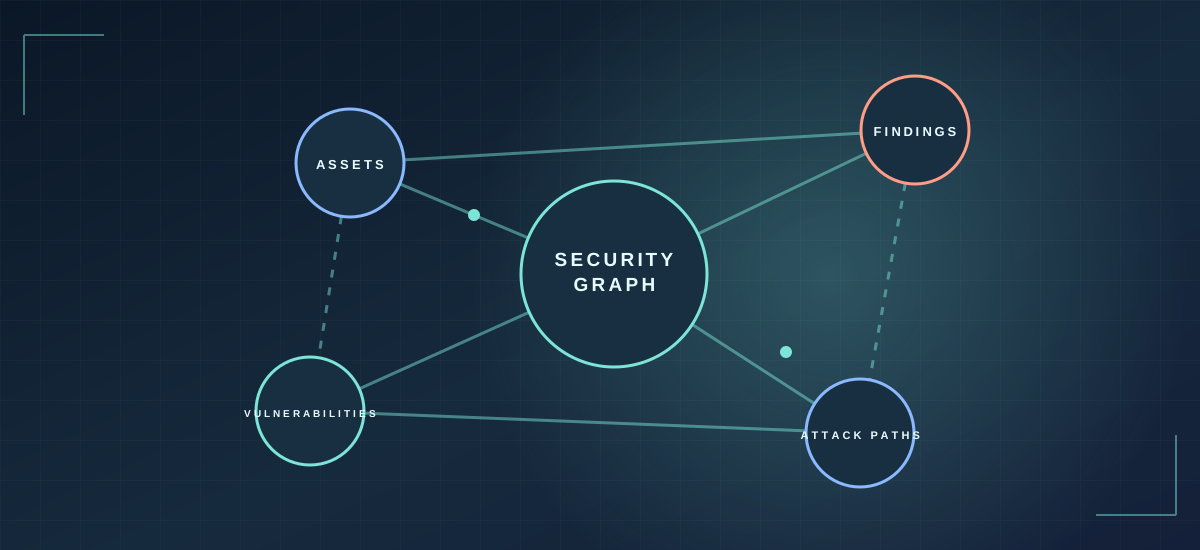
Security graph concept diagram
Security graph concept diagram · visual explanation, not a product screenshot.

Context

Security analysts often move between disconnected inventories and findings. I am building an application that makes the relationships among assets, vulnerabilities, findings, and potential attack paths easier to follow.

Stack & tools

FastAPI · PostgreSQL · Alembic · React · TypeScript

Product concept and application architecture

  • Developing a FastAPI backend with PostgreSQL models and Alembic migrations for structured security records.
  • Building a React/TypeScript application shell and views for assets, vulnerabilities, findings, attack paths, assessments, and remediation.
  • Designing graph-oriented navigation to show context around a finding and support clearer investigation.
Current result & status

Private build in progress. The models and interface structure exist in development; complete AI-assisted analysis and end-to-end workflows have not been released.
02 / Public lab · Iterating
Project case study

AEGIS Enterprise Cyber Range

A small enterprise, built for hands-on security testing.

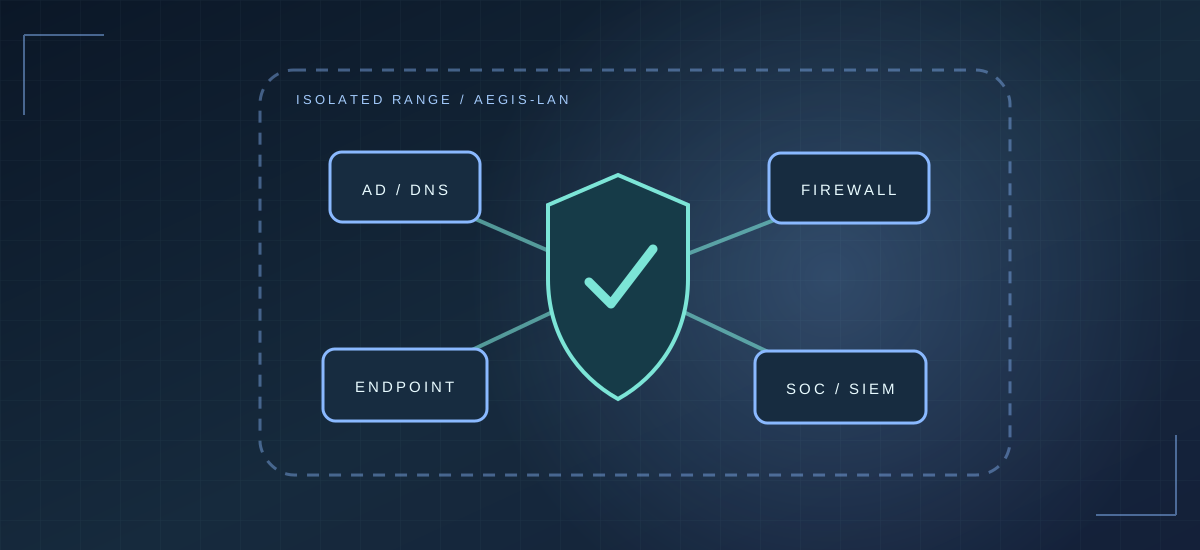
Isolated cyber range concept diagram
Isolated cyber range concept diagram · visual explanation, not a product screenshot.

Context

An isolated VirtualBox lab for practicing how an organization manages user accounts, computers, and security controls. The Windows Server domain and a joined workstation are in place; monitoring integrations are planned.

Stack & tools

VirtualBox · Windows Server 2025 · Active Directory · Group Policy · Windows workstation · planned OPNsense, Splunk, and Wazuh

Enterprise architecture and detection work

  • Configured Active Directory, DNS, organizational units, groups, and workstation Group Policy in a Windows Server domain.
  • Joined a Windows workstation to the domain and tested identity and policy management.
  • Documenting the next steps for firewall routing, telemetry collection, and security monitoring with OPNsense, Splunk, and Wazuh.
  • Recording configuration choices, troubleshooting notes, and test results as the lab develops.
Current result & status

The domain and workstation are configured. Firewall, telemetry, and detection integrations remain future stages of this in-progress lab.

03 / Public simulation · Completed
Project case study

ARES-1 Mars Colony Cyber Defense

Protecting critical systems through segmentation.

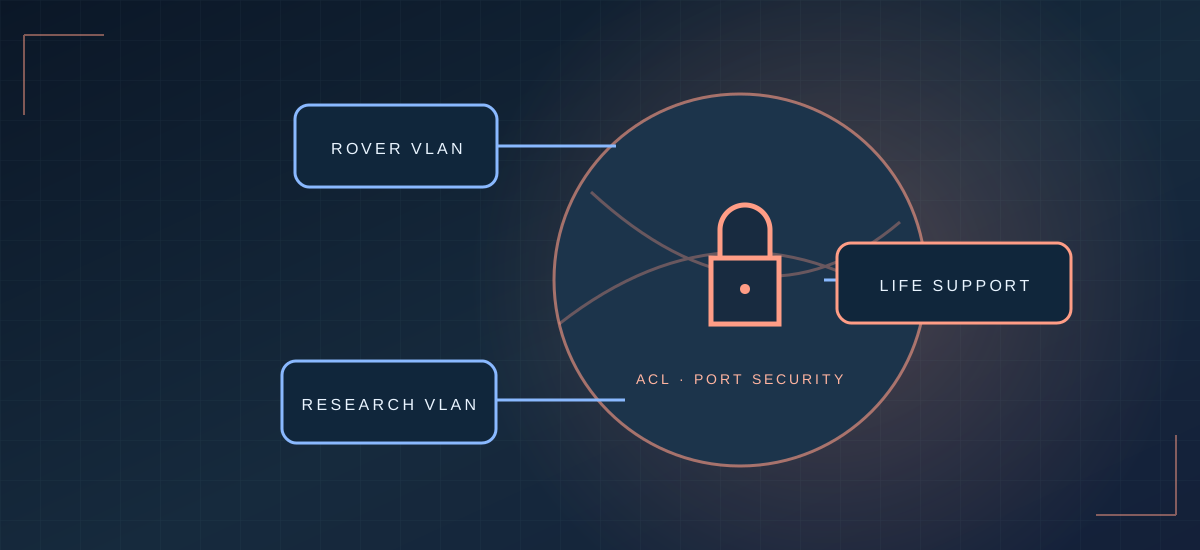
Mars colony network segmentation concept diagram
Mars colony network segmentation concept diagram · visual explanation, not a product screenshot.

Context

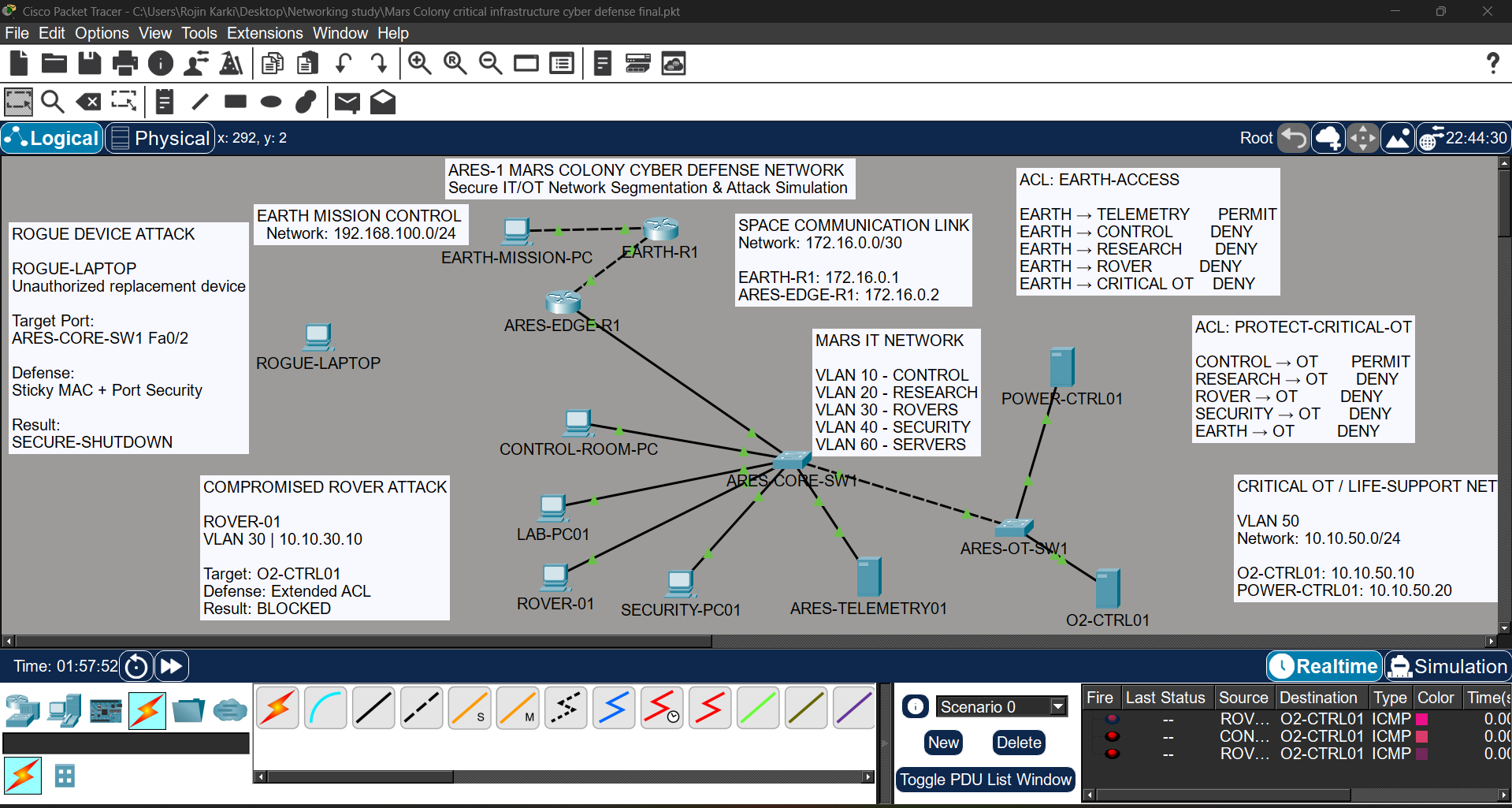
This Cisco Packet Tracer exercise treats a simulated oxygen controller as critical infrastructure. It tests whether ordinary rover or research traffic can reach that system if a device is compromised.

Stack & tools

Cisco Packet Tracer · VLANs · ACLs · Port security

Network controls and test scenarios

  • Separated rover, research, telemetry, control, security, and life-support systems into six main VLANs.
  • Configured router-on-a-stick inter-VLAN routing, extended ACLs, sticky MAC switch security, and VLAN 999 for unused ports.
  • Tested a compromised rover attempting to reach the oxygen controller and a rogue device connecting to a protected switch port.
  • Verified that these unauthorized paths were blocked while intended communication remained available.
ARES-1 Packet Tracer topology from the public repository.
Current result & status

Both blocked-access scenarios are documented in the simulated topology. This is a Packet Tracer validation, not a production deployment.

04 / Public code · Completed
Project case study

Python Network Security Toolkit

Small defensive checks in one command line tool.

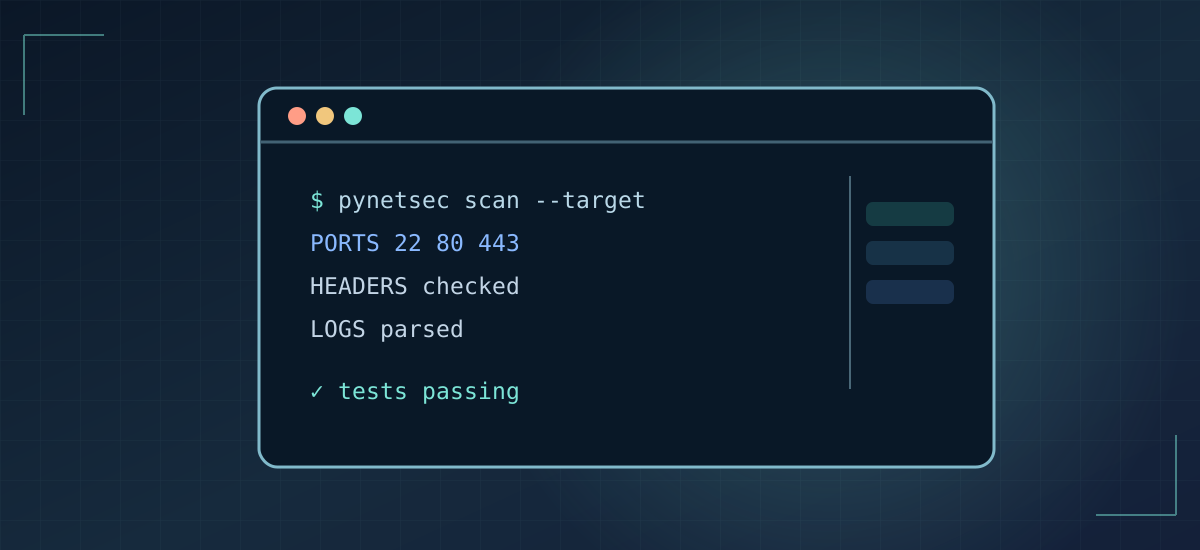
Network security toolkit concept diagram
Network security toolkit concept diagram · visual explanation, not a product screenshot.

Context

I built a modular Python toolkit to make routine network and security inspection repeatable, while learning how to organize utilities as testable modules.

Stack & tools

Python · sockets · HTTP · pytest

Modules and engineering choices

  • Implemented TCP port scanning and banner grabbing for basic service discovery.
  • Added HTTP response-header analysis and a password-hash auditing module.
  • Parsed login logs to flag suspicious activity and assembled the checks in an interactive CLI.
  • Added automated pytest coverage for core behavior.

From the original portfolio

Developed a modular Python-based cybersecurity toolkit for network analysis, security auditing, and automation through an interactive command-line interface.

  • Port Scanner for discovering open TCP ports.
  • Service Banner Grabber for identifying active services.
  • HTTP Security Header Analyzer with security recommendations.
  • Password Hash Auditor supporting multiple hash algorithms.
  • Log File Analyzer for detecting suspicious login activities.
  • Interactive Command-Line Interface (CLI).
  • Automated Unit Testing using PyTest.

Tools noted there: Python, Socket, Requests, PyTest, Cybersecurity, CLI.

Current result & status

The code and tests are public. Use the inspection modules only on systems you own or have permission to assess.

05 / Public simulation · Completed
Project case study

Shree Yasam Campus Network

Two campuses with a clear path between departments.

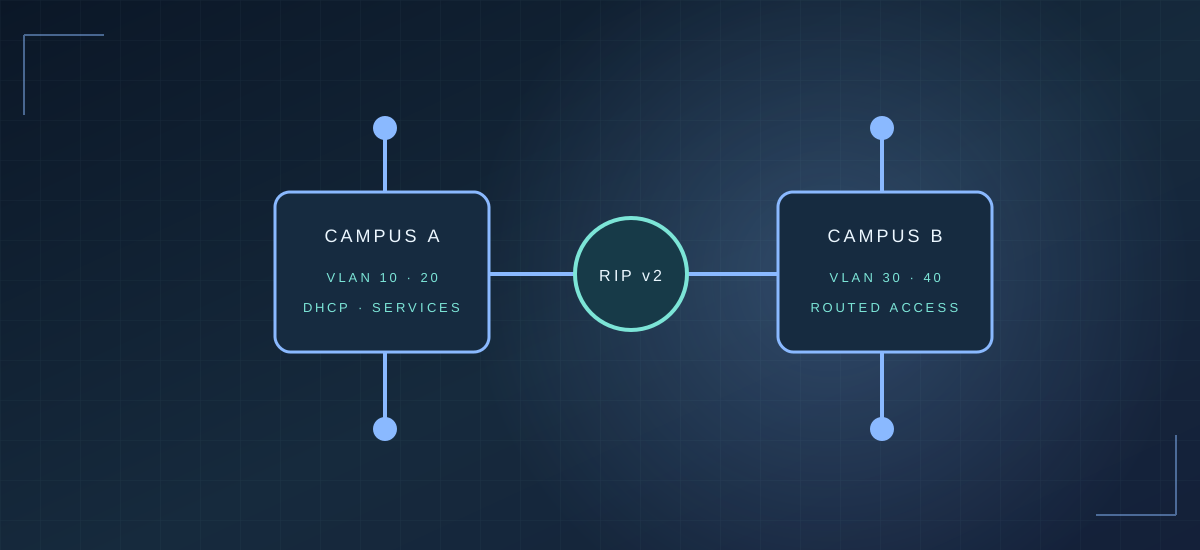
Two campus network concept diagram
Two campus network concept diagram · visual explanation, not a product screenshot.

Context

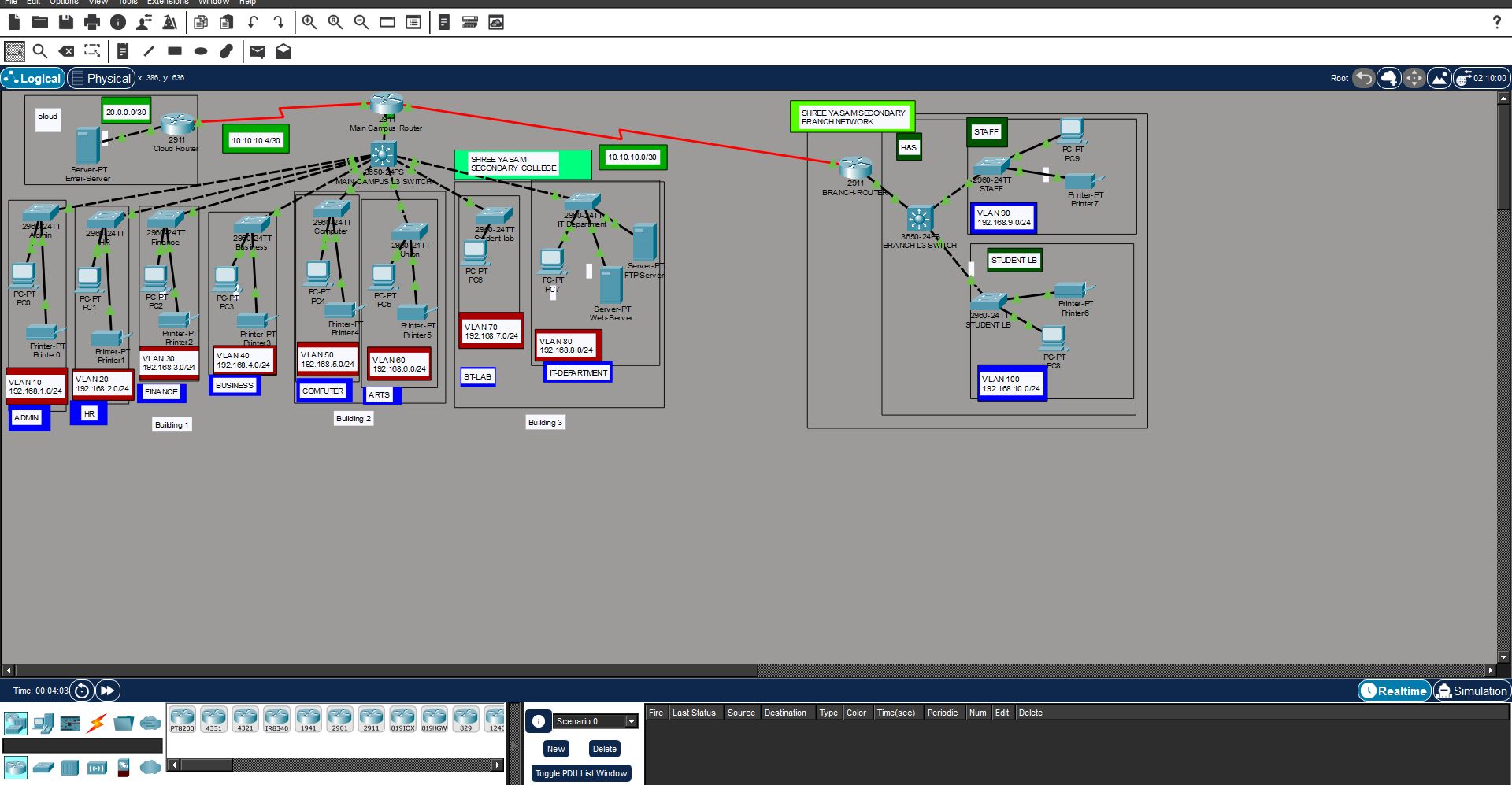
A Cisco Packet Tracer network design for a school with multiple departments, separated traffic, shared services, and communication between campuses.

Stack & tools

Cisco Packet Tracer · VLANs · Layer 3 · RIP v2 · DHCP

Topology and services

  • Segmented departments and labs into separate VLANs and configured inter-VLAN routing through Layer 3 switches.
  • Used RIP v2 between the two campus networks and static routes toward simulated external connectivity.
  • Configured DHCP and simulated internal web and FTP services plus external email access.
  • Applied hierarchical design and switch security settings to make the topology easier to manage and troubleshoot.
Two-campus overview from the public repository.

From the original portfolio

Designed and implemented a scalable enterprise network connecting two campuses, providing secure communication, VLAN segmentation, and centralized network services.

  • Designed an enterprise network supporting 8+ departments.
  • Configured VLAN segmentation and Inter-VLAN Routing using Layer 3 switches.
  • Implemented RIP v2 dynamic routing between campuses.
  • Configured DHCP for automatic IP address allocation.
  • Implemented static routing for secure cloud server connectivity.
  • Applied switch security best practices and hierarchical network design.

Tools noted there: Cisco Packet Tracer, Networking, VLAN, Layer 3, RIP v2, DHCP.

Current result & status

The public repository contains the topology and design material. It is a simulated campus network.

06 / Public prototype · Completed prototype
Project case study

NetVault

A visual home for network architecture ideas.

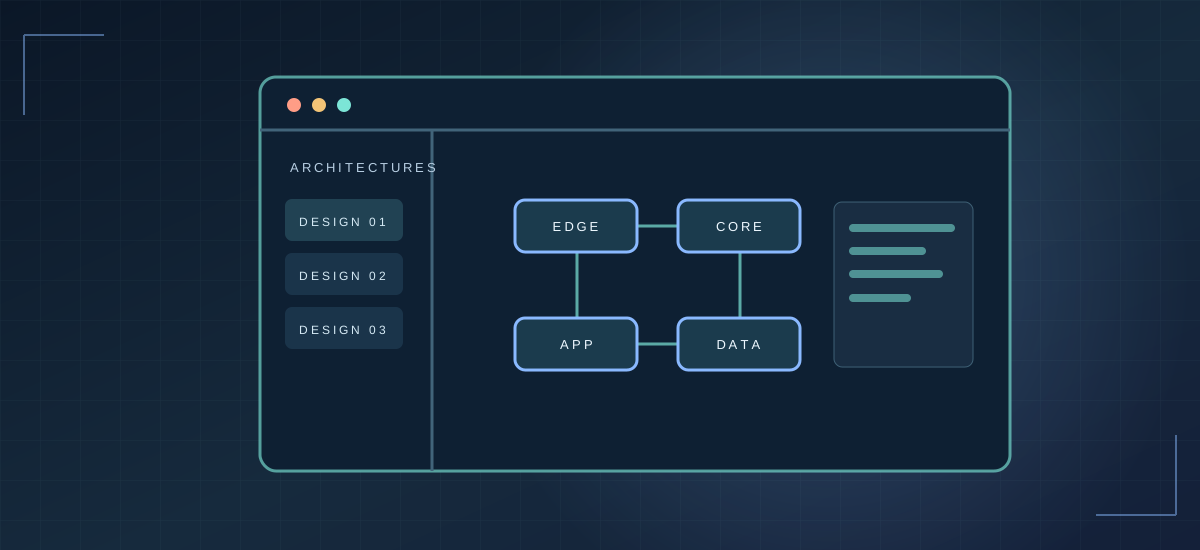
Network design workspace concept diagram
Network design workspace concept diagram · visual explanation, not a product screenshot.

Context

NetVault is a completed initial React and Vite prototype for presenting network designs. The current repository represents that first deliverable; more advanced design and collaboration features are future ideas.

Stack & tools

React · Vite · interface exploration

Current work and next questions

  • Set up the React/Vite application foundation for an interface-oriented network architecture concept.
  • Exploring how topology views and project organization could make a network design easier to inspect and share.
Current result & status

Early-stage prototype. The public README is still a starter template, and the planned features should not be read as delivered.

↑